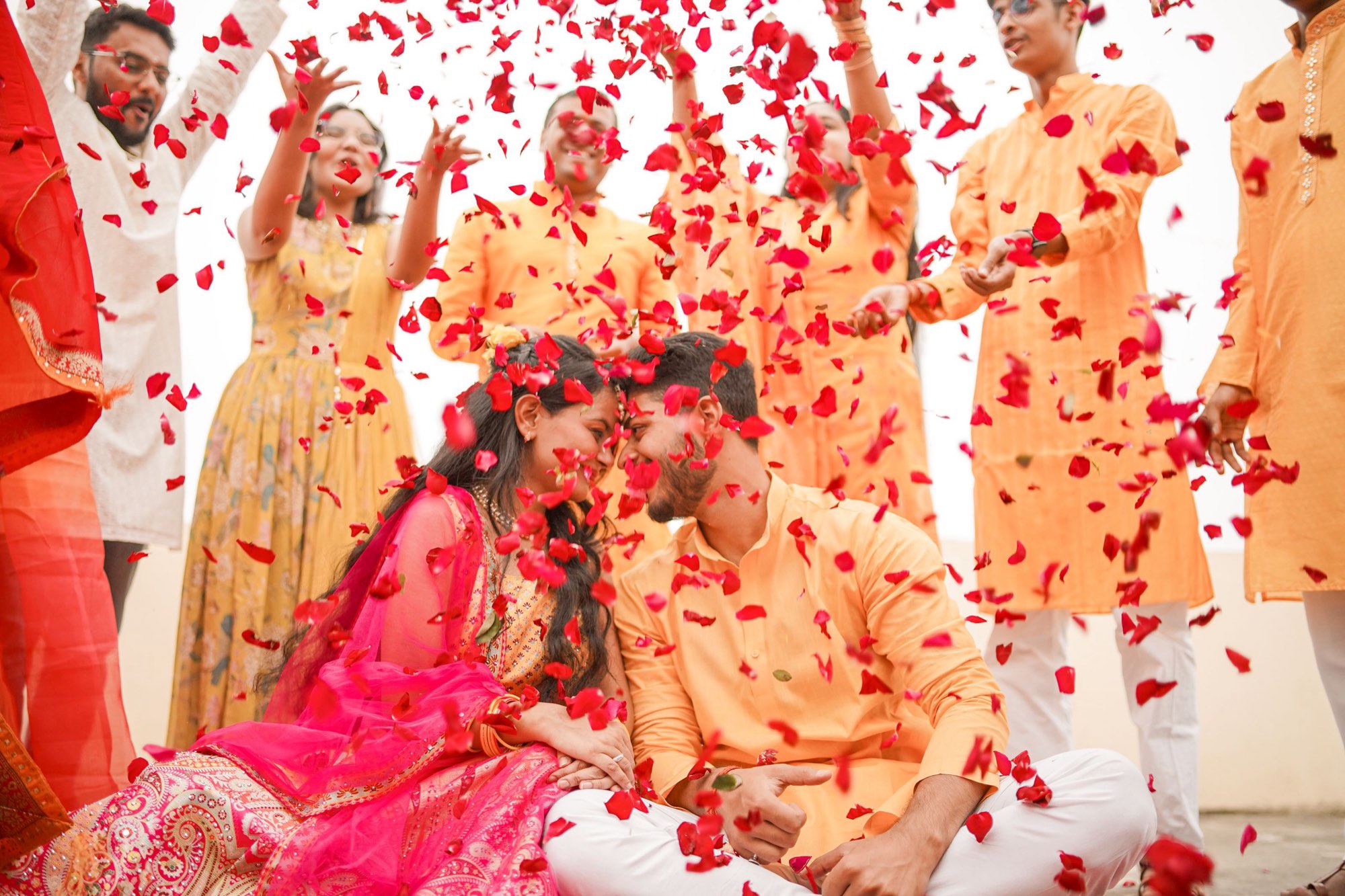
How much does an Indian wedding cost in the US?
A full multi day Indian wedding for 200 to 300 guests in the US usually runs $100,000 to $250,000 in 2026. Intimate, 50 to 100 guests: about $30,000 to $80,000. Large and luxury, 300 to 500 plus: $250,000 to $400,000 and up.
That is roughly 3 to 7 times the $34,200 US average, and the reason is guest count across several catered events, not a wildly higher price per plate. Below is the honest breakdown by category, by event, by metro, and by community, plus the guest hotels and hidden costs most guides leave out. Every range is sourced, and where the data is thin we say so instead of inventing a number.
The short answer, by guest count and events
Search this question and you will be told the average is anywhere from $15,000 to more than $600,000. That is a bit like being told a car costs somewhere between a bicycle and a house. The spread is real, but not useful, because the sources mix three different things: how many guests, how many events, and which city. Fix those and the number gets specific fast.
| Wedding style | Guests | Typical all in cost |
|---|---|---|
| Intimate | 50 to 100 | $30,000 to $80,000 |
| Traditional multi day | 200 to 300 | $100,000 to $250,000 |
| Large / luxury | 300 to 500+ | $250,000 to $400,000+ |
By guest count, a rough rule of thumb: 200 guests lands around $100,000 to $160,000, 300 guests around $150,000 to $250,000, and 500 plus can run $280,000 to $400,000 and up.
Indian wedding vs the US average
Bars scaled to $250,000. US average from The Knot 2026 Real Weddings Study; the Indian bar sits at the midpoint of the typical 200 to 300 guest range.
A real example: about $77,000 for 150 guests
Ranges are useful, but most couples want one number worked out. Here is an illustrative budget for a 150 guest wedding across three events (mehndi and haldi together, a sangeet, then the ceremony and reception on one day), built from the mid range figures on this page. It is an example, not a quote, but the arithmetic is real.
| Category | In this example |
|---|---|
| Catering (3 events) | $25,000 |
| Venue(s) | $12,000 |
| Decor, mandap, florals | $8,000 |
| Photography and video | $6,000 |
| Attire (both, all events) | $5,500 |
| Entertainment (DJ, dhol) | $3,800 |
| Hair and makeup | $1,800 |
| Priest and invitations | $1,600 |
| Vendor subtotal | $63,700 |
| Service charge, gratuity, and tax | + $13,000 |
| Vendor total, all in | about $77,000 |
| Guest hotels (if the family covers ~40 rooms) | + $10,000 |
| With guest hotels | about $87,000 |
Where the vendor budget goes
Catering is almost always the largest line, because it repeats across every event.
Guest hotels are the wild card. If your family covers rooms for out of town relatives, common at Indian American weddings, add roughly $5,000 to $20,000 depending on how many rooms and nights you cover, which is the jump from $77,000 to $87,000 above. See guest hotels and travel below. Beyond that, guest count and the number of events move the total more than anything else: drop to 100 guests and two events and it slides toward $45,000 to $55,000; add a fourth event, a full bar, and heavier decor and it climbs past $110,000 quickly.
The cost breakdown, category by category
Here is where the money goes for a traditional multi day wedding. The single largest cost is almost always venue and catering together, because they repeat across every event.
| Category | Budget | Typical | High / premium metro |
|---|---|---|---|
| Venue (per event) | $5,000 | $15,000 to $40,000 | $25,000 to $80,000+ |
| Catering (per plate) | $50 to $55 | $80 to $150 | $170 to $300 |
| Bar and alcohol (per person) | $0 (dry) | $25 to $70 | $100+ |
| Decor, mandap, florals | $10,000 to $20,000 | $25,000 to $60,000 | $50,000 to $100,000+ |
| Photography | $3,000 to $3,500 | $6,000 to $12,000 | $12,000 to $35,000+ |
| Videography (added) | +$3,000 | +$3,000 to $8,000 | photo + video $10,000 to $25,000+ |
| Bridal attire (all events) | $3,000 | $5,000 to $15,000 | $20,000 to $25,000+ |
| Groom attire (per outfit) | $500 to $1,000 | $1,000 to $2,500 | $2,500 to $5,000 |
| Hair and makeup (all events) | $1,500 | $1,500 to $6,000 | $6,000+ |
| DJ and entertainment | $1,500 to $2,000 | $5,000 to $12,000 | $15,000 to $30,000 |
| Dhol player (baraat) | $500 to $750 | $750 to $1,200 | $1,500+ |
| Priest / pandit | $500 | $1,000 to $1,500 | $3,000 (+ dakshina, travel) |
| Invitations | $0 (digital) | $500 to $6,000 | $5,000 to $15,000 |
| Baraat transport (horse) | $400 | $400 to $600 | elephant $8,000 to $10,000+ |
| Guest hotels (if the family covers rooms) | $5,000 | $8,000 to $15,000 | $20,000+ (100+ rooms) |
Cost per plate
Catering runs roughly $50 to $55 per plate at the entry level in lower cost metros, $80 to $150 for a typical North Indian buffet, and $170 to $300 for premium or fusion menus in New York or LA. A weekday mehndi dinner runs lower than a formal reception, and buffet runs lower than plated. Vegan menus often cost nothing extra, while live stations and Jain or Indo Chinese menus add roughly $8 to $25 per head. One thing to hold onto: the per plate quote is not the per plate price. Service charge, gratuity, and tax add about 40 to 50 percent on top, so a $100 quote is closer to $150 in practice.
Cost by event
Because there are several events, the easiest way to check your budget is one event at a time. Most couples spend the most on the reception, then the sangeet, then the ceremony.
- Mehndi ($5,000 to $15,000): henna artists at roughly $70 to $110 an hour each, a lighter meal at $40 to $80 a head, simpler decor. Often combined with haldi to save money.
- Haldi: usually the most intimate and least expensive. Priced on its own it tends to run roughly $2,000 to $6,000, but a clean standalone US figure is hard to source, so most couples fold it into the mehndi budget.
- Sangeet: one of the largest events, regardless of region. It carries catering for 150 to 250, most of your entertainment spend, and real decor.
- Ceremony ($10,000 to $30,000 at an upscale venue, all vendors): the mandap, priest, and the day itself.
- Reception: the biggest single event by spend. Decor alone runs $10,000 to $30,000, plus catering at $80 to $150 a head for your largest guest list of the weekend.
Watch for events that quietly become full events. A welcome dinner, a garba night, an after party, or a next day brunch each add their own catering, venue, and staff. For an Indian American wedding these are common, and at $150 to $300 a head they are not small add ons.
Cost by US metro
Geography moves the number more than almost any single choice you make. The same 300 guest wedding is a different financial event in Hoboken than in Houston, and it is not close.
| Metro | Relative to national | Notes |
|---|---|---|
| NY / NJ | 30 to 50% above | Highest cost market. Large vendor scene, premium pricing across the board. |
| Los Angeles | High | Large vendor scene and premium venues, close to the NY tier. |
| Bay Area | Mid to high | Venue driven. Top hotels can run $200 to $250 per guest per event. |
| Atlanta | Mid to high | Comparable to the Bay Area depending on venue. |
| DC / Northern Virginia | Mid to high | One of the largest South Asian populations in the US, with a deep vendor base. |
| Chicago | Mid | Strong, competitive South Asian vendor base, often good value. |
| Houston / Dallas | 20 to 30% below | Deep vendor base keeps prices down despite a large community. |
Venue for a 300 guest event is the clearest example: a dedicated banquet hall runs $8,000 to $20,000, a hotel ballroom in Chicago, Houston, or Dallas $15,000 to $40,000, and an upscale hotel in NYC, LA, or San Francisco $25,000 to $60,000 and up. A venue 45 minutes outside the expensive core, at the same guest count, can save five figures.
Cost by community and tradition
There is no single Indian wedding, and treating it as one is where most cost guides go wrong. What changes the number is the number of events, how decor heavy the style is, and whether there is a bar. A rough, honest sketch:
| Tradition | What shapes the cost | Tendency |
|---|---|---|
| North Indian / Punjabi (Hindu) | Full sequence of events, baraat, live entertainment, often a bar | Largest, most decor and entertainment heavy |
| Gujarati (Hindu / Jain) | Participatory garba, often vegetarian, frequently no alcohol | A dry, vegetarian menu can trim catering meaningfully |
| South Indian (Tamil, Telugu) | Temple based morning ceremony, minimal decor | Often shorter and less decor heavy, so lower |
| Bengali | Compact three event structure | Generally lighter than a full Punjabi format |
| Sikh (Anand Karaj) | Gurdwara ceremony, community langar, often a separate catered reception | Ceremony can be modest; a hotel reception still adds up |
| Muslim (Nikah + Walima) | Simple nikah contract, separate walima feast | Ceremony simple; the walima can still be lavish |
Guest hotels and travel, the line nobody quotes
This is the cost most guides skip, and for an Indian American family it is often the one you cannot skip. Out of town family is expected, and many families do more than share a discount code. They reserve a hotel room block and frequently cover the rooms for close relatives, sometimes for most guests. That is a real departure from the mainstream US norm where guests pay their own way, and it can be a five figure line the vendor quotes never show.
The mechanics: a 300 to 400 guest wedding can mean 60 to 200 plus room nights, often spread across two or three hotels at different price points. A room block gets you a 20 to 25 percent group discount, but the contract usually carries an 80 percent attrition clause, which means if the rooms go unbooked, you still owe for most of them. Then there is the rest of the travel layer.
| Item | Typical US cost | When it applies |
|---|---|---|
| Hotel room block | 20 to 25% off, 10 to 200+ room nights | Nearly always; the family often covers close family rooms |
| Welcome bags | $15 to $35 per room | Common for out of town guests, one per room |
| Favors / return gifts | ~$460 total (more for 100+ guests) | Near universal |
| Guest shuttles | $800 to $1,500 | Multi venue or hotel to venue transport |
| Valet | $500 to $1,200 | When the venue lacks self parking |
| Security | $300 to $720+ | Often required by venues with alcohol or 200+ guests |
Guest side gifting like shagun is a norm your guests follow, not a cost the family carries, so it does not belong in your budget.
Why Indian weddings cost more
It is not that the flowers are secretly pricier. Two things do almost all of the work.
Cost per guest
Guest count. The US average wedding is 117 guests. An Indian wedding is usually 200 to 500, and every one of those guests is fed and hosted at several events, not one. At roughly $150 to $300 per guest per event, each additional 100 guests can add tens of thousands of dollars, multiplied across the mehndi, sangeet, ceremony, and reception. Across a full weekend that is about $400 to $800 per guest.
Who is holding the guest list. When parents fund or co fund the wedding, common in Indian American families, they invite their own circles too. Your guest list was 80 people right up until your parents remembered they have colleagues. That single dynamic is often a bigger multiplier than tradition itself.
Where you can save without it showing
Most small optimizations barely move the number. A few big ones move it a lot:
- Cut guest count across a threshold, not at the margin. Going from 300 to 200 changes your venue tier, catering, and staffing all at once. Going from 300 to 285 changes almost nothing.
- Combine events. Mehndi and haldi together, or sangeet the night before the wedding, saves a full event of venue and catering.
- Choose the metro or the edge of it. A venue outside the expensive core, at the same guest count, is often the single biggest saving available.
- Buffet over plated, beer and wine over full bar. Guests genuinely do not experience these as lesser when the food is good.
- Rent, do not buy. Rental gold and some outfits are increasingly normal and read no differently in photos.
The biggest saving of all is not overpaying in the first place. An AI wedding planner that gets itemized quotes back from vendors and reads every one to the last page catches the service charge and overtime before you sign, not after.
Planning it yourselves? You do not have to price it alone.
You are the couple who did the reading, which means you are self managing a five figure to six figure event without a $10,000 planner. That is exactly who Rae is for. Rae is the AI wedding planner who writes to the vendors, gets real itemized quotes back, reads every quote to the last page so the service charge and overtime do not surprise you, and keeps every vendor on one timeline across all your events.
You pick the wedding you want. Rae does the chasing, the comparing, and the math against real numbers for your city. Free for a week, then $399 once, never a percentage of what you spend.
a full service planner runs $3,800 to $5,500 and up · rae is $399, once, for your whole wedding
Indian wedding cost, answered straight
How much does an Indian wedding cost in the US?
A full multi day wedding for 200 to 300 guests usually runs $100,000 to $250,000 in 2026. Intimate weddings of 50 to 100 guests run about $30,000 to $80,000, and large luxury weddings of 300 to 500 plus can exceed $250,000 to $400,000. That is roughly 3 to 7 times the $34,200 US average, driven mostly by guest count across several catered events.
Why is the average Indian wedding cost so hard to pin down?
Published figures range from $15,000 to over $600,000 because sources mix guest counts, number of events, and metros, and most are vendor content, not surveys. Fix how many guests and how many events, and the range narrows quickly.
What is the most expensive part of an Indian wedding?
Venue and catering together, because they repeat across several events. Decor and the mandap are usually second, then photography and video, attire, and entertainment.
How much is catering per plate for an Indian wedding in the US?
Roughly $50 to $55 per plate entry level in lower cost metros, $80 to $150 for a typical North Indian buffet, and $170 to $300 for premium or fusion menus in NYC or LA. Then service charge, gratuity, and tax add about 40 to 50 percent on top of the quoted price.
How much does an Indian wedding cost per guest?
About $150 to $300 per guest for a single event, and roughly $400 to $800 per guest across a full multi day wedding, because most guests are hosted at several events.
Why do Indian weddings cost more than the average American wedding?
Guest counts run 200 to 500 rather than 117, and the wedding is several catered events rather than one reception, so costs compound. When parents fund the wedding they usually invite their own circles too, which is often the single biggest multiplier.
How much does a mandap cost?
A basic rental runs about $1,000 to $3,000, a typical setup $3,000 to $8,000, and an elaborate custom mandap $8,000 to $20,000 or more, usually inside a larger decor package.
Do you pay for guests' hotel rooms at an Indian wedding?
Many Indian American families do cover rooms for close relatives, and some block rooms for most guests, unlike the mainstream US norm where guests pay their own way. A 300 to 400 guest wedding can mean 60 to 200 plus room nights across several hotels, and room block contracts usually carry an 80 percent attrition clause, so you owe for rooms that go unbooked.
Who pays for an Indian wedding?
Traditionally the bride's family paid for the wedding and the groom's family for the reception, but in the US that has mostly given way to both families co funding, and increasingly the couple contributing too. Whoever funds a side usually invites their own circle, which is often the single biggest driver of the final number.
Is a Sikh or Muslim wedding the same cost as a Hindu one?
Not necessarily, and they are different ceremonies, not variations of a Hindu wedding. A Sikh Anand Karaj happens in a gurdwara with community langar; a Muslim wedding centers on the nikah with a separate walima. Both can still include a large catered reception, so cost depends far more on guest count and events than on the ceremony.
Is it cheaper to have an Indian wedding in India?
Usually yes, often a third to half less, because venue, catering, and decor labor cost less there. The tradeoff is travel and hotels for your US based guests, which can erase some of the savings once you count flights and rooms for a large guest list.
How can you cut Indian wedding costs without it showing?
Cut guest count across a threshold rather than at the margin, combine events like mehndi and haldi, pick a venue just outside the expensive core, choose buffet over plated, and rent rather than buy gold and some outfits. Guest count and venue move far more money than small line items.
What costs do Indian wedding budgets usually forget?
Service charge, gratuity, and tax that stack about 40 to 50 percent on top of the catering quote, guest hotel rooms the family covers, extra events like the welcome dinner and after party, welcome bags and favors, a day of coordinator, wedding insurance venues now require, pandit dakshina, and guest transport.
Sources and a note on the numbers
Figures are industry consensus ranges from US focused Indian wedding sources, not a formal survey, and we flag where a clean US number was not available. There is no official survey of Indian wedding costs specifically, which is exactly why the public averages are all over the place. The one figure here from a large survey is the $34,200 US average and $292 per guest baseline, from The Knot 2026 Real Weddings Study. Category and total ranges: My Brown Wedding, Zivaara Studio, Saathiya, SoDJLA. Hotel room blocks and attrition, bar, and service charge stacking cross checked against standard US venue and catering contract structure.
Start your free week with Rae.
You did the reading. Now hand off the doing. Tell us one true thing about your day and a founder personally starts your free week. Then $399 once, for your whole wedding, never a percentage of what you spend.
a full service planner runs $3,800 to $5,500 and up · rae is $399, once
Consider it off your plate.
The two of you are on Rae's list. A founder will reach out within a day, and a note from us is on its way to your inbox.
now onboarding · a founder personally starts every couple